The Big Picture: How Art Changed Its Mind Over 30,000 Years
Introduction: How Art Evolved From Ancient to Modern
Art history is a fascinating story about how human beings think and see the world! In my newest blog post, we skip the complicated jargon and take a simple, friendly journey through 30,000 years of art—broken down into 4 massive shifts. You just need to understand the massive shifts in how human beings saw themselves and their world.
Grab a cup of coffee, and look at How art evolved from ancient to modern.
If you walk through a massive art museum, it can feel like a complex collection of styles. You start in a room full of ancient Egyptian statues, wander past beautiful Italian landscapes, and somehow end up staring at a blank canvas with a single red stripe in the modern art wing.
1. The Age of Magic and Ritual (Ancient Art)
For the vast majority of human history, art wasn’t meant to be framed and hung in a living room. It was functional. It was magic.
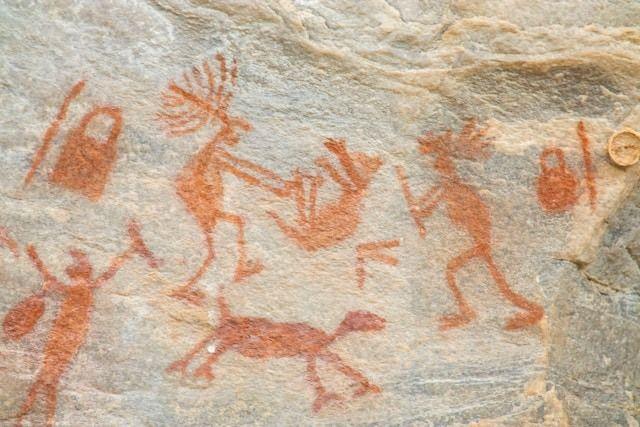
When prehistoric humans painted animals on the walls of deep, dark caves, they weren’t decorating. They were likely performing rituals, perhaps hoping to guarantee a good hunt or honor the spirits of nature.
In this era, art was a tool for survival, religion, and speaking to the Gods. The artist wasn't a "genius" looking to express his personal feelings; he was a skilled worker performing a necessary duty for the community.
2. The Mirror Era (The Renaissance to the 1800s)
Fast forward a few thousand years to Europe, and something massive shifts. Humanity starts to focus less on the heavens and more on the earth. We enter the era of Humanism, where the human experience, science, and nature take center stage.
Suddenly, the goal of art became to act as a mirror to reality. Artists became obsessed with mathematics, anatomy, and light. They figured out how to use "perspective" to make a flat, 2D canvas look like a 3D window you could step right through. The ultimate compliment you could give an artist during this time was that their painting looked exactly like the real world.
3. Breaking the Mirror Period (The Modern Movements)
Then, in the 1800s, a piece of technology ruined everything for painters: the camera was invented.
Painting had an existential crisis. If its job was no longer to copy reality, what was it supposed to do?
The answer changed art forever: Paint what the camera can't capture.
Artists stopped painting exactly what was in front of them.
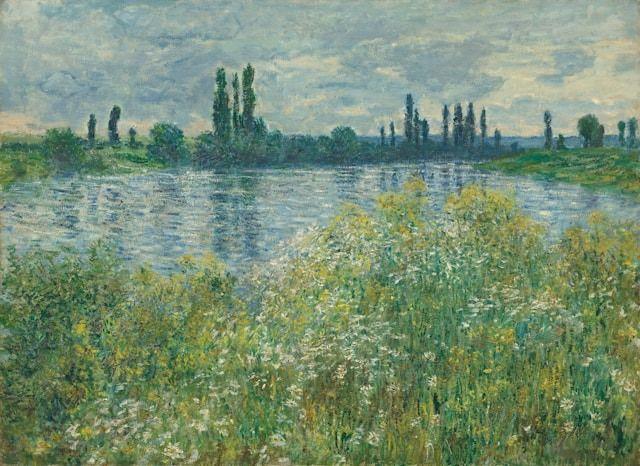
Instead, they captured the fleeting feeling of light bouncing off water (Impressionism).
Artists like Pablo Picasso broke reality apart, shattering objects into geometric shapes to show multiple viewpoints at once (Cubism).
As world wars shook the globe, the Dada movement rebelled by mocking logic and traditional rules entirely, while Surrealism bypassed reason to explore the bizarre world of dreams and the subconscious mind.
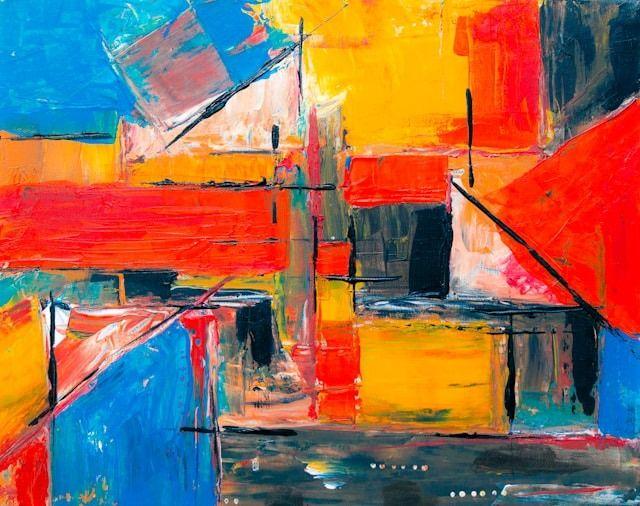
Soon, artists threw out recognizable subjects altogether. Abstract Expressionism became about "action painting"—capturing raw emotion through the physical act of throwing and dripping paint.
Then came Pop Art, where artists used bright colors and graphically styled illustrations of everyday commercial objects as a social critique, often with underlying political commentary.
On the opposite end of the spectrum, Minimalism stripped everything away; for minimalists, simplicity meant creating art to have its own pure identity, rather than forcing it to represent something else entirely.
4. The Idea Age (Contemporary Art)
Which brings us to today. Once artists realized they didn't have to paint reality, they eventually realized they didn't even have to paint physical things.
In the contemporary era, the core of art shifted from the object to the idea. The artist's goal is no longer just to show off their technical skill with a brush. Instead, their goal is to ask a question, provoke a reaction, or make you look at the world differently. The "art" isn't just the canvas on the wall; the art is the thought process that happens inside your head when you look at it.
The Unchanging Core
Just as the camera fundamentally changed the trajectory of painting in the 19th century, modern advancements in high-quality printers, specialty papers, and digital graphic design tools have completely transformed traditional art today. The definition of a "canvas" is now entirely fluid. The digital art has facilitated progression from realism & abstraction into innovative & aspirational artworks.
Yet, while the tools and styles have shifted wildly from cave walls to digital screens, the core of art has never actually changed. It has always been humanity's way of saying: "I was here. This is what I saw. This is what it felt like."
Next time you walk into a museum, you don't need to know the jargon. Just look at a piece and ask yourself: Are they trying to talk to the Gods, mirror the world, capture a feeling, or ask a question?